The Talent Era of Photography Is Over
Why “good” became worthless—and how photographers win with positioning, certainty, and brand.
TASTE & CRAFTGROWTH PLAYBOOKS
Patrick Segovia
12/31/20253 min read
Today, photographers don’t just compete with other photographers. They compete with smartphone cameras, creators, cheaper studios, fast-turnaround editors, and clients trained by social media to expect polished output instantly—often at bargain prices. The market didn’t just get crowded. It got reprogrammed.
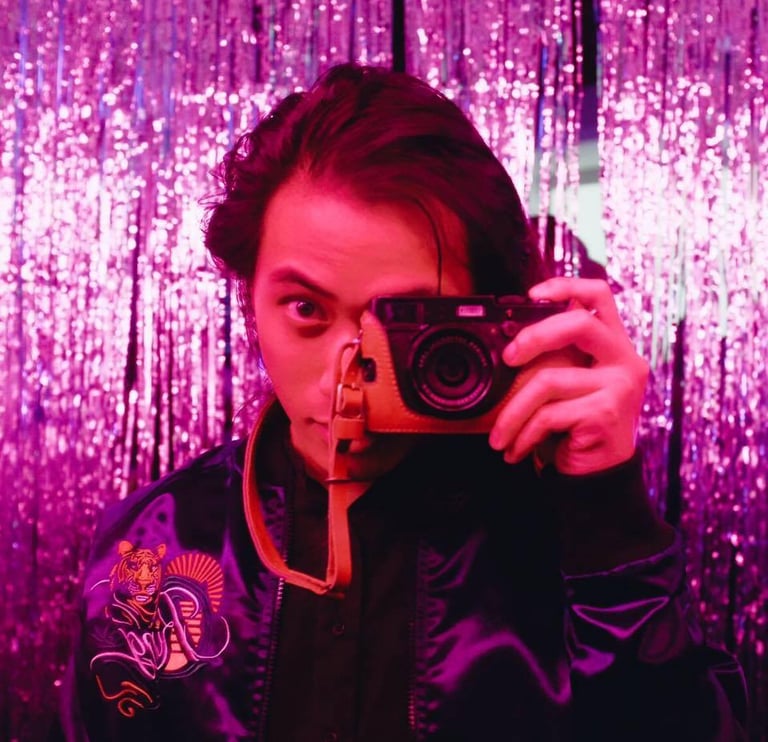
If you want to survive (and win), you’re not just building a portfolio. You’re building a brand—like BJ.
What changed:
The photography got “good enough” for everyone
Smartphones and AI-enhanced editing didn’t replace professional photography—what they replaced is the baseline. More people can produce decent images, so “decent” stopped being valuable. And yes, you can feel this in real life: creators with mediocre production capabilities often generate more value than brands and photographers who are objectively “better,” because they’re faster, more visible, and closer to the algorithm.
Attention became the new currency
People don’t buy what’s best. They buy what’s visible, remembered, and trusted. If you’re invisible, you get priced like a commodity.
Clients don’t know how to judge quality
Most clients can’t articulate lighting, lens choice, or composition. They judge based on clarity: “Do I get what you do—and do I feel safe paying you?”
That’s branding.
The real game: Positioning
Positioning is one sentence: “I help (specific client) get (specific outcome) through (your unique approach).”
Examples:
“I help founders look credible online through portrait sessions designed for LinkedIn and pitch decks.”
“I help families preserve legacy through documentary-style home sessions with a cinematic finish.”
“I help brands sell more through product photos engineered for ads, not aesthetics.”
Notice what’s missing: “I’m passionate.” Passion doesn’t sell. Outcomes do.
And to the young and hopeful: I’ll be blunt—if your plan is “be great and the market will reward me,” you’re going to suffer. Not because you’re untalented, but because the system changed over the years. Your portfolio is proof, not the product. Your real product is certainty.
People pay to reduce risk:
Risk of looking bad
Risk of wasting money
Risk of not getting what they imagined
This is why politicians stumble without proper PR, and why brands make dumb decisions when they skip real marketing counsel.
Certainty isn’t optional anymore—it’s the offer.
So build certainty with:
A clear offer (what’s included, what’s not)
A process (how it works, step-by-step)
Predictable delivery (timelines, revisions, usage rights)
Social proof (testimonials that mention outcomes)
If you can’t explain your value in 10 seconds, the market will decide your value for you—based on price.
And here's the tragedy: it becomes a rat race to the bottom. Low-skill camera operators keep undercutting, standards drop, and brands slowly forget what excellence even looks like. Seasoned photographers start rebuking newcomers—or they leave the industry entirely for greener pastures. The ones who’ve gone through rigorous training understand this early and get more cautious about betting their whole future on “the craft.”
So here’s what you do:
Package your work into named offers
Stop selling “a shoot.” Sell something people can instantly understand.
Example: “Founder Credibility Kit” or “Brand Launch Visual System.”
Choose a lane before you widen
Generalists get compared. Specialists get chosen. Pick one lane for 90 days. Dominate it. Then expand.
Build a repeatable signature
A signature isn’t a filter. It’s a recognizable experience: how you direct, how you frame, how you deliver, how the work feels.
Market like a system, not a mood
You don’t need to post daily. You need consistency. Weekly.
1 proof post (case study)
1 teaching post (how-to)
1 authority post (opinion)
This is the new truth. If you want to be a professional photographer today, you’re also choosing to be a brand builder—especially if you don’t have the rigor (or desire) to build a traditional business machine around your craft. The market doesn’t reward talent anymore. It rewards clarity, trust, and positioning.
There was a decade between 2008–2016, in an era of creatives, when being “good” at photography was the main differentiator. Your own photographic style, genre, and technical mastery of the craft shone. People who carved a name for themselves in print media eventually ran into the inevitable death of print because the digital democratization of content. Even some of the best photographers who graced print from the ’90s and early 2000s have knelt: retired, pivoted, or moved on. Just like TV didn’t kill radio but rewired mass attention, video and other digital formats have steadily sidelined print media and, by effect, photography as a standalone craft. The dream of being a commercial or editorial photographer became bleak.
A few names cemented themselves anyway. The lucky ones survived because their value was packaged, emphasized, and defended—often with business managers and a deliberate brand presence. BJ Pascual comes to mind: personal brand, visibility across platforms, even YouTube. Back then, the path was straightforward: learn the craft, build a portfolio, get referrals, stack the work, get on magazines, and broadsheets.
That era is over.